Taste the Heritage: 15 Dishes to Make You Fall in Love with Vietnam Before You Even Land
If you want to understand Vietnam, don’t look at the monuments; look at the morning steam rising from a street-side stall. In Vietnam, food is not just sustenance. It is the invisible thread that stitches generations together. It is a sensory adventure that takes you from the misty, poetic highlands of the North to the sun-drenched, fertile pulses of the Mekong Delta.
For the uninitiated, Vietnamese cuisine might seem like a simple matter of fresh herbs and clear broths. But look closer, and you’ll find a masterclass in balance-a delicate dance between the “Five Elements” of taste: sour, bitter, sweet, spicy, and salty. Whether you are navigating the narrow “Phở Mile” in East London or sitting on a tiny plastic stool in the heart of Saigon, these 15 dishes offer a roadmap to the resilient and creative heart of a nation. Grab your chopsticks; your pilgrimage begins now.
1: The North – Elegance in simplicity
The North is the cradle of Vietnamese civilisation, a land of ancient traditions and distinct seasons. Its geography, dominated by the fertile Red River Delta, has fostered a palate defined by subtlety and balance. Unlike the fiery South, Northern cuisine honours the natural essence of ingredients. Here, richness is found in the clarity of a broth and the delicate aroma of a fresh herb-a reflection of the refined, poetic soul of Hanoi.
-
Phở Bò (Beef Noodle Soup)
Phở is the quintessential Vietnamese dish, a comforting noodle soup synonymous with the country’s culinary identity. Originating in Northern Vietnam, specifically in Hà Nội and Nam Định, its name is often linked to the French word feu (fire), reflecting the “shaking” of the wok or the long simmering of the broth. The dish consists of an aromatic broth, flat and thin rice noodles (bánh phở), and tender slices of beef or chicken.
The soul of Phở lies in its broth, which is simmered for hours with charred onions, ginger, and a blend of spices like star anise, cloves, and cinnamon. Interestingly, Phở is a relatively “young” dish, emerging in the early 20th century as a genius fusion of French beef-eating culture and traditional Vietnamese rice noodles. Today, it stands as a national symbol of balance and resilience.

-
Bún Chả (Hanoi Grilled Pork with Vermicelli):
Originating in the capital city of Hà Nội, Bún Chả is a smoky and savory masterpiece of grilled pork and noodles. The “bún” refers to the rice vermicelli, while “chả” denotes the pork, which is prepared in two ways: thinly sliced pork belly and ground pork patties. Both are marinated in fish sauce and sugar before being grilled over charcoal to a caramel-colored perfection.
The grilled pork is served in a bowl of warm, diluted fish sauce dipping liquid, accompanied by fresh herbs and pickled vegetables. This dish gained global legendary status in 2016 when President Barack Obama and chef Anthony Bourdain shared a humble Bún Chả dinner at a local shop in Hanoi, proving that some of the world’s best food is found on a plastic stool.
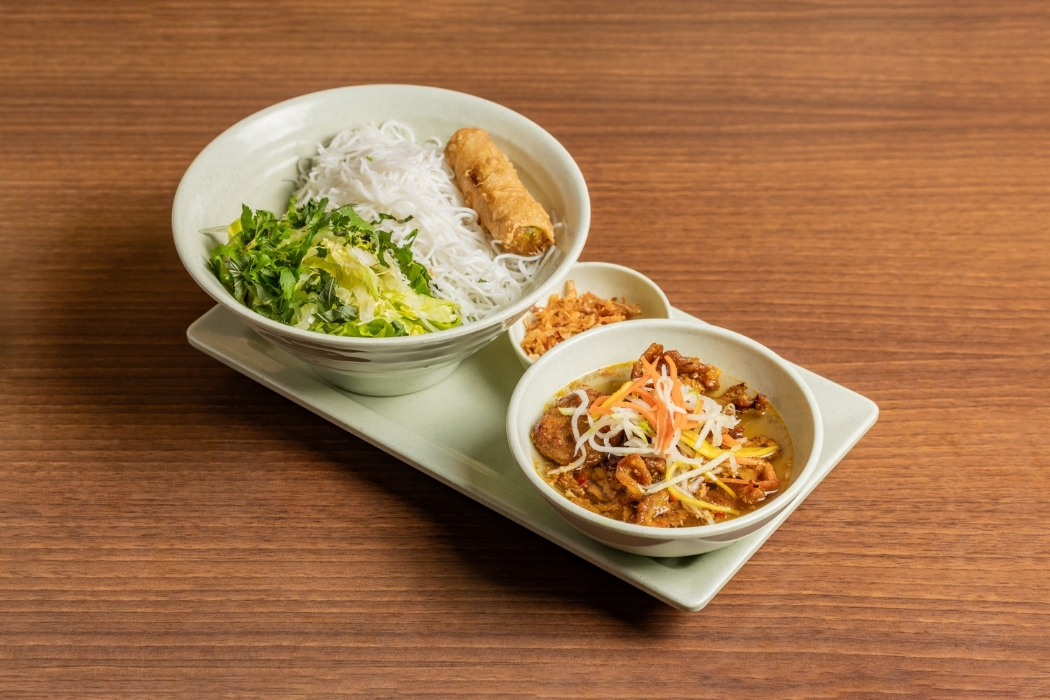
Bun Cha Hanoi Grilled Pork with Vermicelli(Nemnoms.uk) -
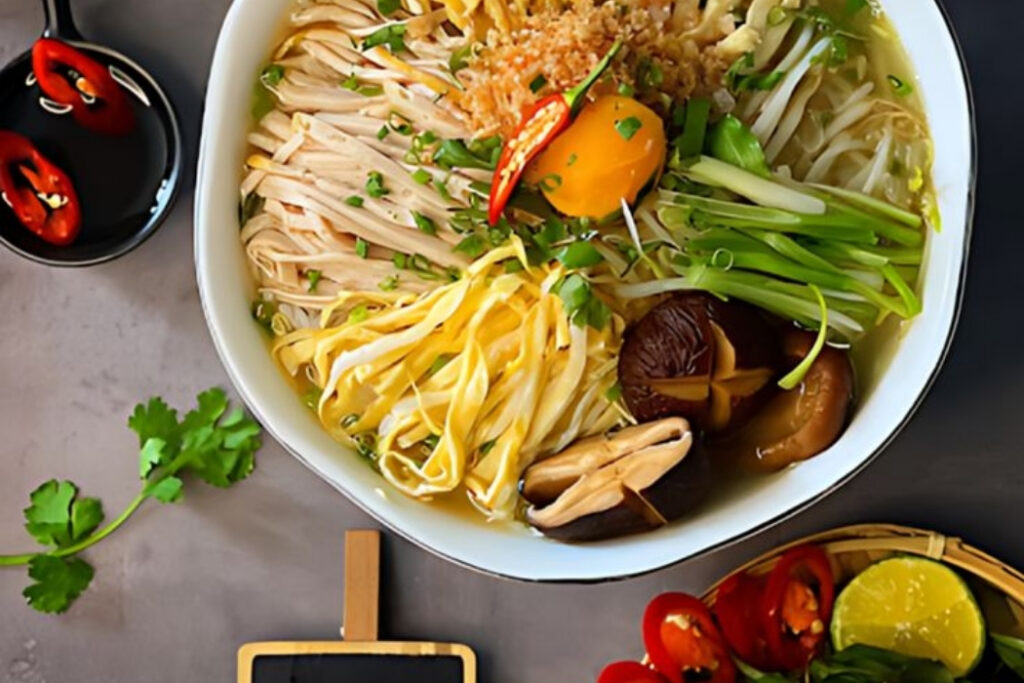
Bún Thang (Five-Colour Noodle Soup):
Representing the culinary precision of old Hanoi, Bún Thang is often called “the multi-coloured silk thread soup.” Every ingredient-from the omelette to the chicken silk-is shredded with surgical finesse. It is a visual and gastronomic work of art, reflecting the sophisticated, zero-waste philosophy of the Northern elite.
-
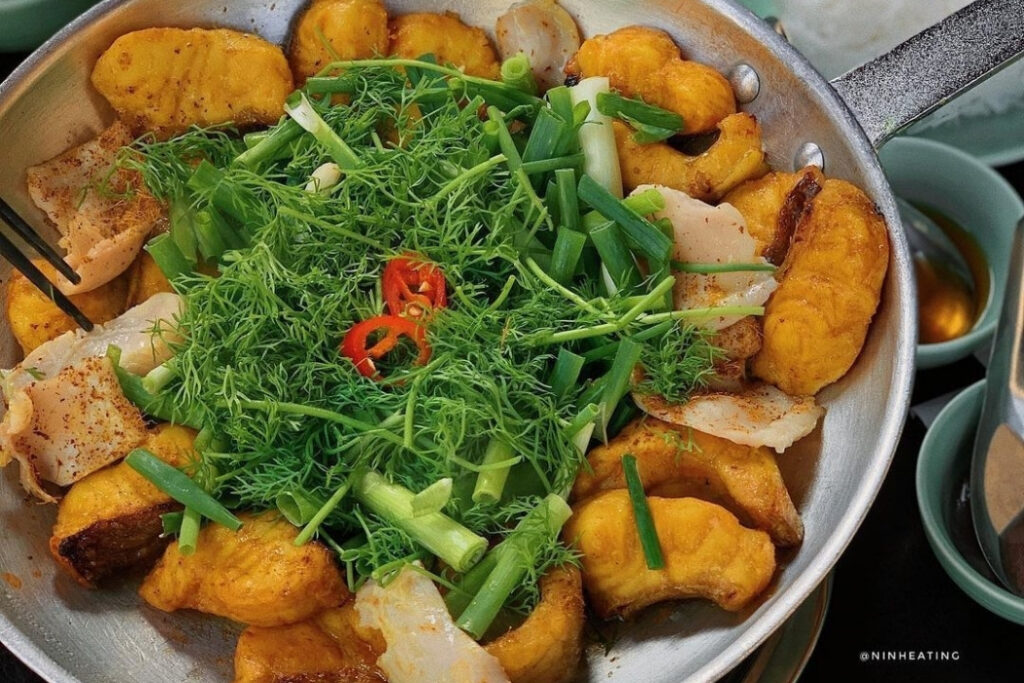
Chả Cá Lã Vọng (Turmeric Fish with Dill):
Chả Cá Lã Vọng is more than just a dish; it is a legendary culinary ritual from Hà Nội. It features firm fish fillets, commonly catfish, marinated in a vibrant yellow turmeric sauce. The name refers to a specific family-owned restaurant in the Old Quarter that became so famous the entire street was renamed “Chả Cá” in its honor.The experience is unique because the fish is sizzled in a pan at the diner’s table, heaped with massive amounts of fresh dill and spring onions. The aromatic greens wilt into the turmeric oil, creating a fragrant coating for the fish. Eaten with rice vermicelli and a hint of shrimp paste, it is a sophisticated dish that defines the refined taste of the North.
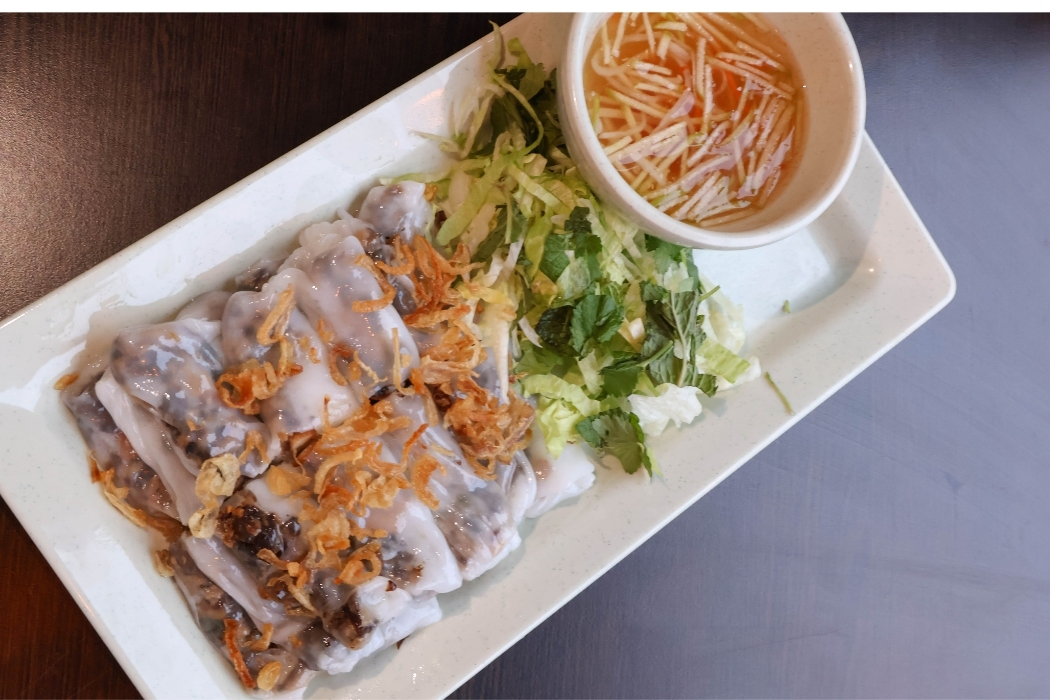
- Bánh Cuốn (Steamed Rice Rolls)
Watching a master craft Bánh Cuốn is like watching a ballet. Rice batter is spread into sheets as thin as silk, then wrapped around a delicate mixture of minced pork and wood-ear mushrooms. Topped with crispy shallots and dipped in a mild, sweet fish sauce, it is the ultimate expression of Northern grace.
2: The central – The royal & the rustic
Moving to the rugged “waist” of the country, Central Vietnam is a land of extremes-hemmed in by mountains and a turbulent sea. This harsh landscape has forged a people of incredible resilience and a cuisine of bold intensity. Spice is the soul here; the heat of chillies and the depth of fermented shrimp paste are used to invigorate the body. It is a fascinating world where rustic coastal flavours meet the meticulous artistry of the ancient Imperial palace.
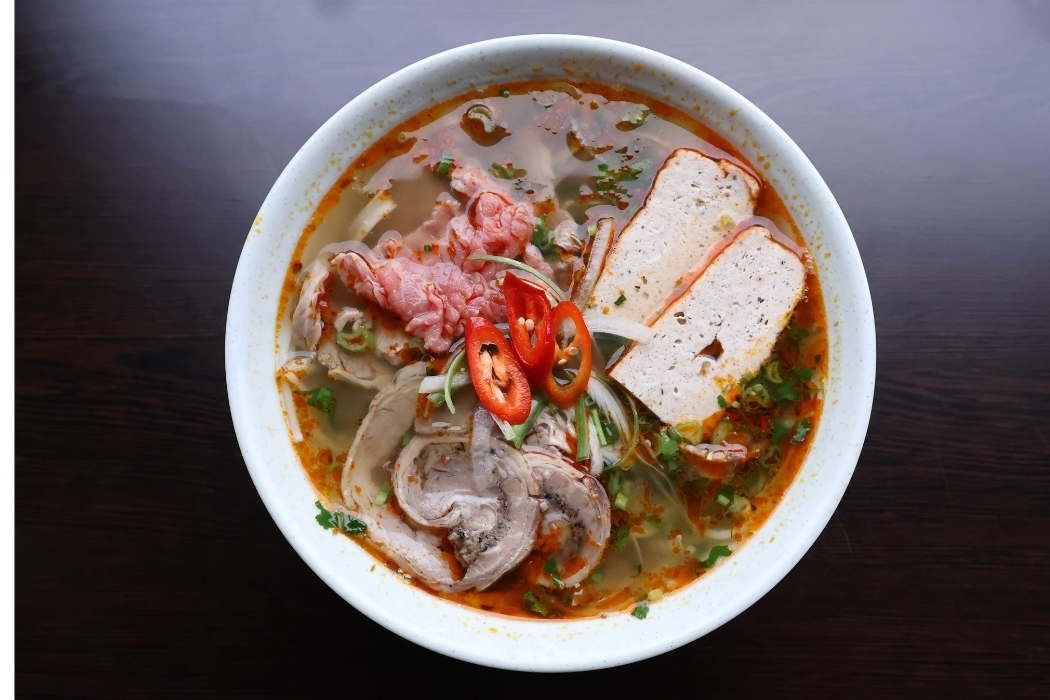
- Bún Bò Huế (Spicy Beef Noodle Soup): Sự bùng nổ của mắm ruốc và sả. Đây là món ăn đại diện cho sự mạnh mẽ và chiều sâu của vùng đất Cố đô.
If Phở is elegant and delicate, Bún Bò Huế is its fiery and robust cousin from the ancient royal city of Huế. This spicy beef noodle soup packs a punch with a broth flavored by lemongrass and fermented shrimp paste. Annatto seeds are used to give the soup its signature deep red hue, signaling the spicy warmth that awaits the diner.
The noodles used in Bún Bò Huế are thick and cylindrical with a satisfyingly chewy texture, quite different from the flat noodles of Phở. Typical bowls include brisket, oxtail, and sometimes pork knuckle, creating a rich and complex meal. It is a dish that embodies the bold, sophisticated culinary heritage of the former imperial capital
- Mì Quảng (Quang Style Noodles):
Hailing from the Quảng Nam province in Central Vietnam, Mì Quảng is a unique noodle dish that defies the typical soup-to-noodle ratio. Unlike other Vietnamese soups that use a generous amount of liquid, Mì Quảng is served with only a small ladle of highly concentrated, savory broth, resulting in a bold and intense flavor profile.
The dish features wide, flat rice noodles topped with a variety of proteins such as shrimp, pork, or chicken. What truly sets it apart are the toppings: toasted sesame rice crackers and roasted peanuts, which provide a crunchy contrast to the chewy noodles. It is a hearty, earthy dish that reflects the rugged and resourceful nature of Central Vietnamese people.

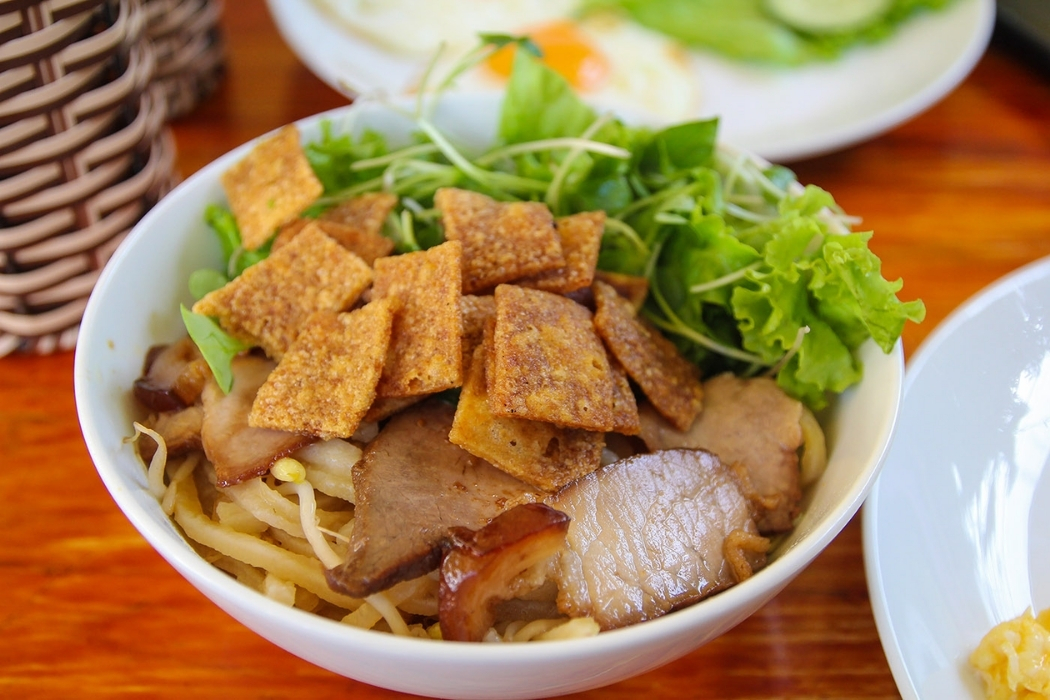
- Cao Lầu (Hoi An Noodles):
Cao Lầu is a distinctive noodle bowl found only in the ancient town of Hội An. The name “High Floor” harks back to the 17th century, when merchants would dine on the upper floors of restaurants to watch over their shops. Its thick, chewy noodles have a unique texture and grayish-brown color that cannot be replicated elsewhere.
Legend has it that authentic Cao Lầu noodles must be made using water from the thousand-year-old Bá Lễ well and ash from trees on the nearby Cham Islands. Topped with slices of barbecue pork (char siu) and crispy rice crackers, this dish is a delicious piece of history that reflects the multicultural influences of this UNESCO World Heritage port town.
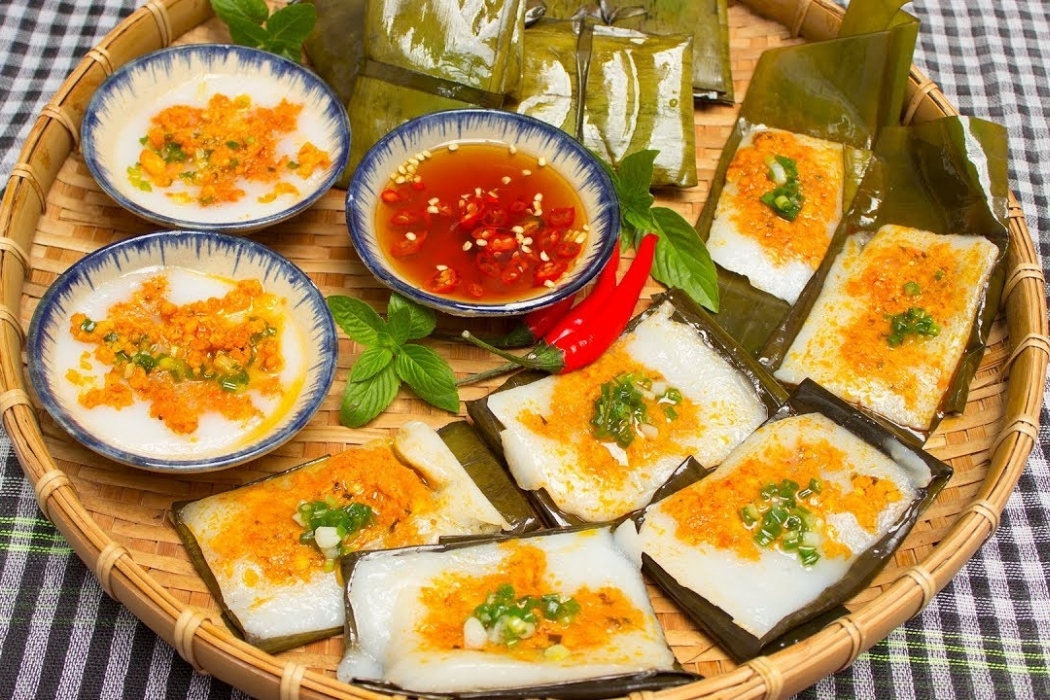
- Bánh Bèo/Nậm/Lọc (Hue Rice Cakes): Những “miếng ngọc” nhỏ xíu trong lá chuối, đại diện cho sự tỉ mỉ của ẩm thực cung đình Huế.
These delicate “jewels” steamed in banana leaves represent the painstaking attention to detail of Hue’s royal court. Whether it’s the translucent “clear” dumplings or the dainty rice cakes topped with dried shrimp, they offer a refined journey through texture and tradition.
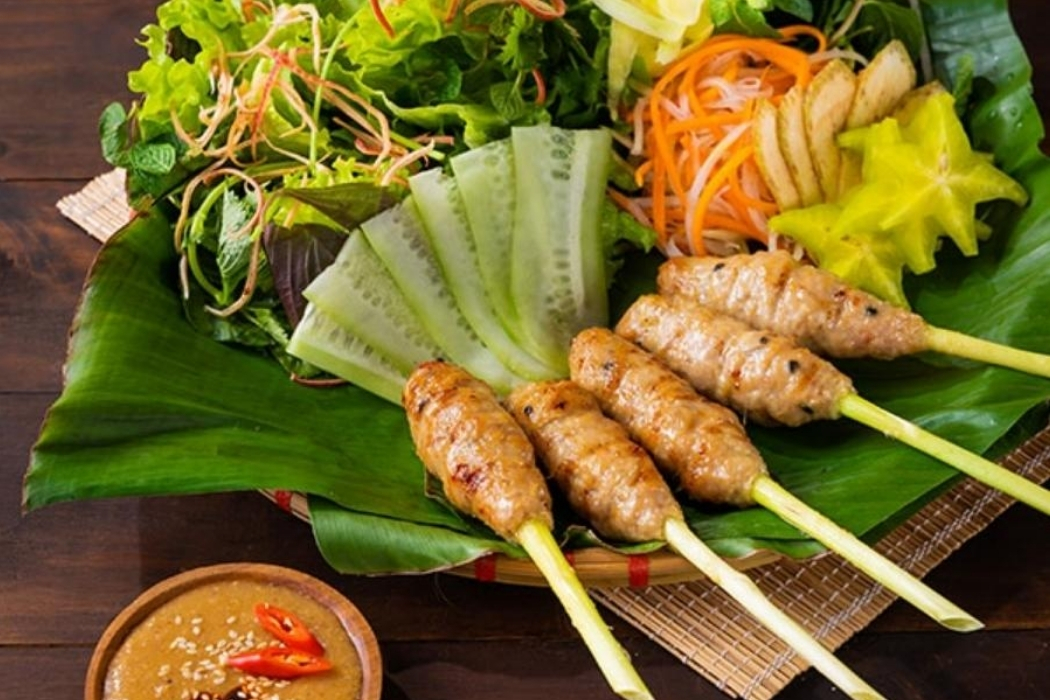
- Nem Lụi (Lemongrass Pork Skewers): Trải nghiệm cuốn-chấm thủ công, nơi ngũ vị hòa quyện trong nước lèo đậu phộng béo ngậy.
The ultimate interactive dining experience. Succulent pork is grilled directly on stalks of lemongrass, infusing the meat with a citrusy perfume. You wrap them yourself in rice paper with herbs and green fruit, dipping the roll into a rich, velvety peanut sauce that lingers on the tongue.
3: The South – The Bold & the Bountiful
The South is a tropical paradise of eternal sunshine and the emerald veins of the Mekong Delta. Blessed with fertile soil and endless orchards, Southern cuisine is a vibrant celebration of abundance and liberty. The flavours here are unapologetically sweet and creamy, enriched by palm sugar and coconut milk. Reflecting the warm, open spirit of its people, a Southern meal is a lush “forest” of fresh herbs—simple, generous, and full of life.
-
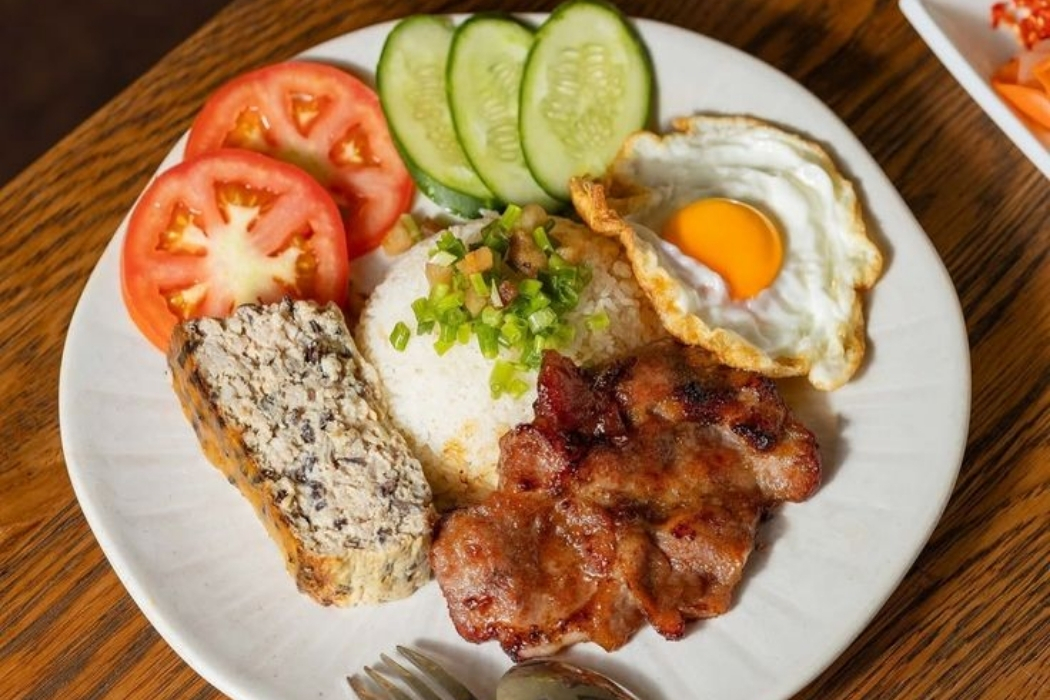
Cơm Tấm (Broken Rice):
Cơm Tấm, or “broken rice,” is a soul-satisfying staple of Saigon. Historically, “broken rice” consisted of fractured grains that broke during the milling process-rice that was once considered “waste” and sold cheaply to workers. Today, it has been transformed into a beloved national treasure that embodies Vietnamese resourcefulness.
The small, soft grains of rice are usually served with a marinated grilled pork chop, shredded pork skin (bì), and a steamed egg meatloaf (chả trứng). Finished with a drizzle of scallion oil and a side of sweet-and-sour fish sauce, Cơm Tấm is a hearty, balanced meal that represents the bustling, resilient spirit of Southern Vietnam.
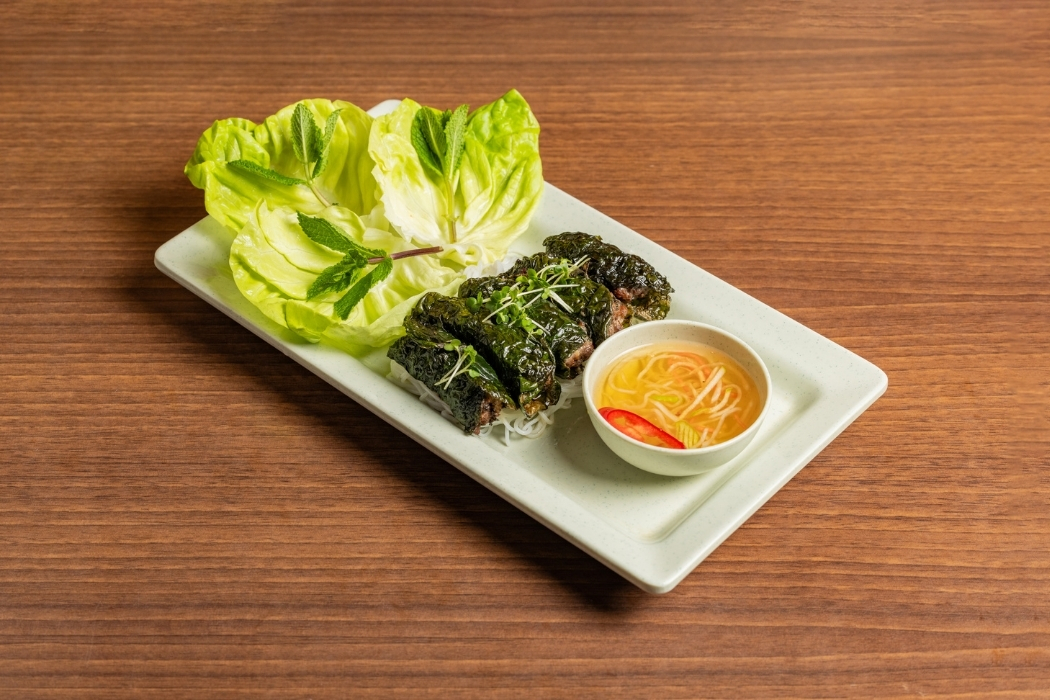
- Bò Lá Lốt (Beef Wrapped in Betel Leaves)
Bò Lá Lốt is a popular Southern Vietnamese snack that is impossible to ignore when it’s being cooked. Minced beef is seasoned with garlic, shallots, and lemongrass, then wrapped tightly in wild betel leaves (lá lốt) before being grilled over charcoal. The name simply describes the meat and the leaf, but the flavor is far from simple.
The slightly peppery, medicinal scent of the betel leaves infuses the meat as it grills, creating an incredible herbal aroma. These small, cigar-shaped rolls can be eaten on skewers, served with rice, or wrapped in rice paper with herbs. They are a favorite in Saigon’s “street food soul,” often enjoyed during late-night gatherings with friends.
-
Bánh Xèo (Golden Pancake or Sizzling Crepes):
Bánh Xèo is a vibrant, golden dish from Southern Vietnam that engages all the senses. Its name translates to “sizzling pancake,” mimicking the loud xeo xeo sound the rice batter makes when it hits a searing hot skillet. The batter is made from rice flour and turmeric powder, giving it a bright yellow hue that many mistake for egg.
The pancake is filled with pork, shrimp, and bean sprouts, then fried until the edges are thin and crispy. Eating Bánh Xèo is a hands-on, interactive experience: you tear off a piece of the pancake, wrap it in a large lettuce or mustard leaf with fresh herbs, and dip it into a tangy fish sauce. It is a beloved meal that celebrates communal dining and rustic flavors.

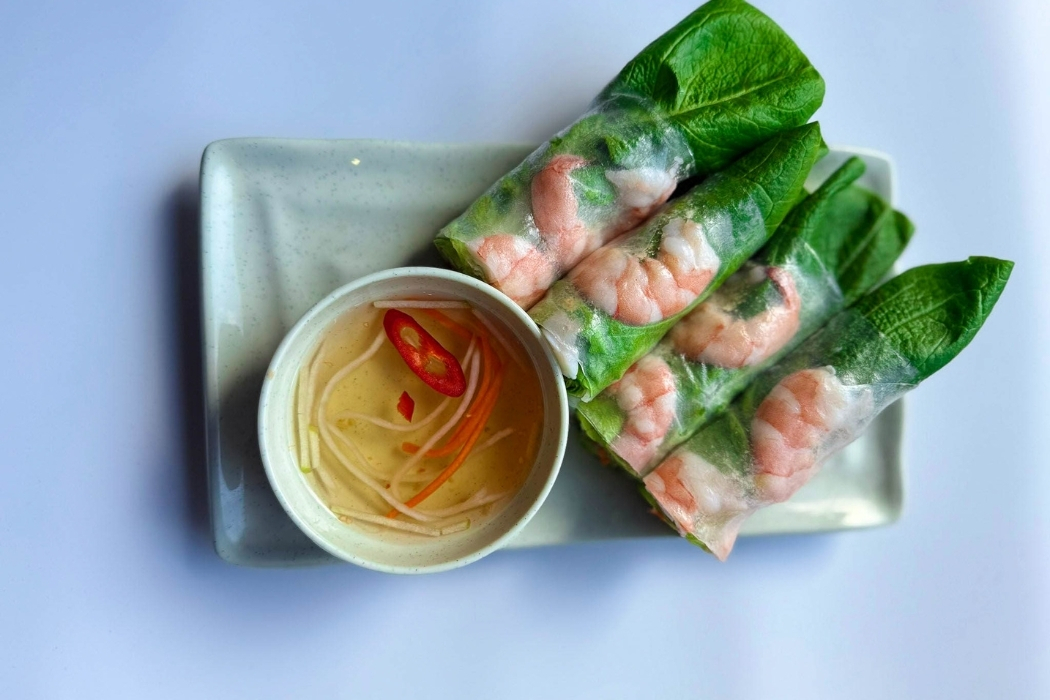
- Gỏi Cuốn (Fresh Summer Rolls):Gỏi Cuốn, commonly known as Vietnamese fresh summer rolls, is a staple appetizer that epitomizes the simplicity and freshness of the Southern landscape. The name literally means “salad rolls,” aptly describing the garden of ingredients inside. Unlike fried spring rolls, these are wrapped in translucent rice paper that is briefly dipped in water to become pliable-a technique that requires a steady hand to prevent tearing.Each roll is a vibrant bundle of rice vermicelli, shrimp, pork, and a bouquet of fresh herbs like mint and chives. Served cold with a rich dipping sauce made from hoisin and peanuts, they are the perfect light snack for warm weather. They offer a clean, refreshing bite that showcases the natural flavors of high-quality ingredients.
Gỏi Cuốn (Fresh Summer Rolls)(Nemnom.uk) -
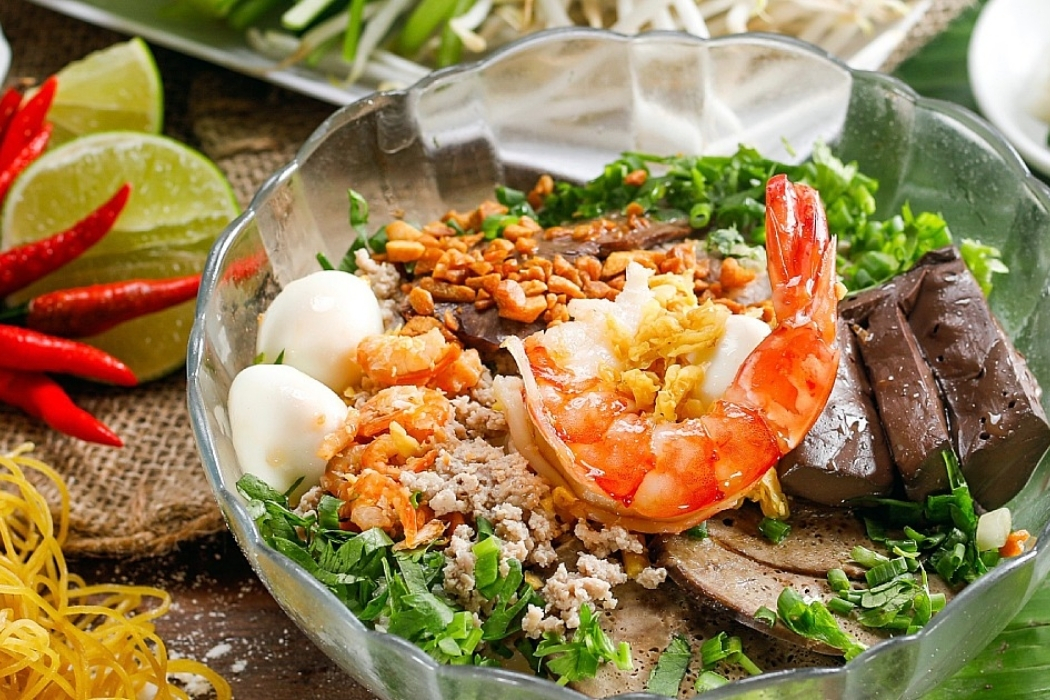
Hủ Tiếu Nam Vang (Phnom Penh Noodle Soup):
Often dubbed the “Phnom Penh noodle soup,” Hủ tiếu Nam Vang is a fascinating reflection of Saigon’s multicultural history, blending Cambodian roots with Chinese techniques and Vietnamese flavors. Unlike the spice-heavy soups of the North, this dish is defined by a clear, intensely savory broth simmered from pork bones, dried squid, and shrimp.
A standard bowl is a vibrant assembly of chewy rice noodles topped with minced pork, shrimp, quail eggs, and fresh herbs. Whether served “wet” in a steaming broth or “dry” with a signature savory soy sauce, Hủ tiếu Nam Vang represents the open, welcoming soul of the South—a complex yet comforting dish that has become a quintessential staple of Vietnam’s urban food scene.
- Bánh Mì
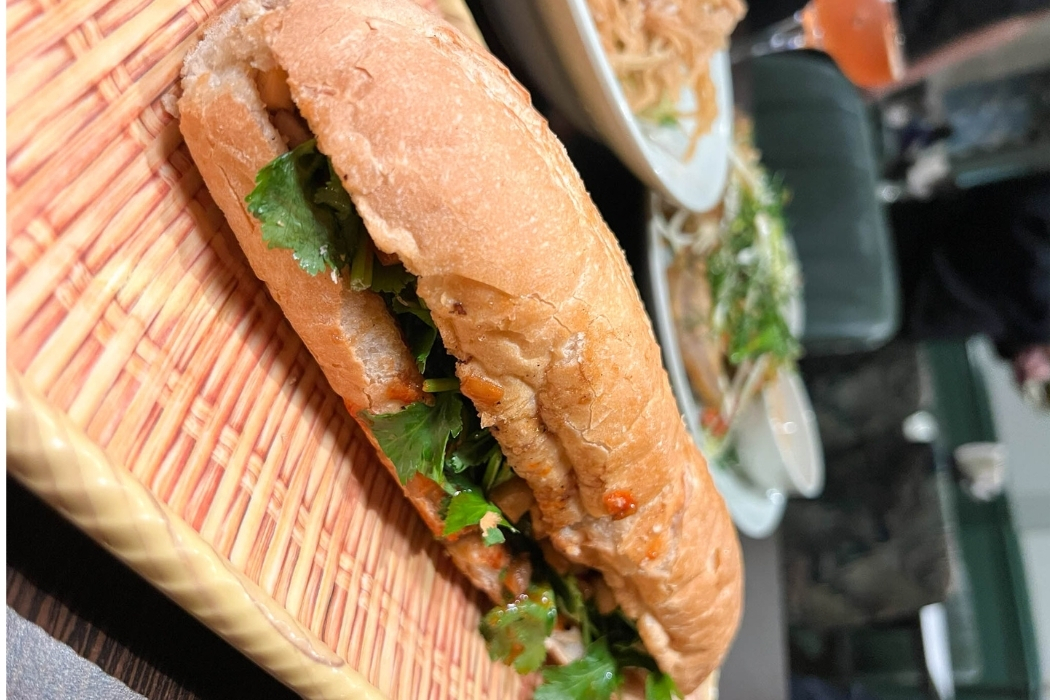
Bánh Mì represents a perfect marriage between French influence and local Vietnamese ingenuity. Originally a simple French baguette brought over during the colonial era, it was transformed in Saigon into a world-famous street food sandwich. The name “Bánh Mì” literally translates to “wheat bread,” but its identity is defined by the explosion of flavors tucked inside its crispy, airy crust.
A classic Bánh Mì features a savory medley of pâté, Vietnamese cold cuts, and sometimes grilled meats, balanced by a refreshing crunch of pickled daikon and carrots. The addition of fresh cilantro and a spicy kick of chili provides the signature Vietnamese finish. It is a masterclass in texture, contrasting a crispy exterior with a soft, flavorful interior.
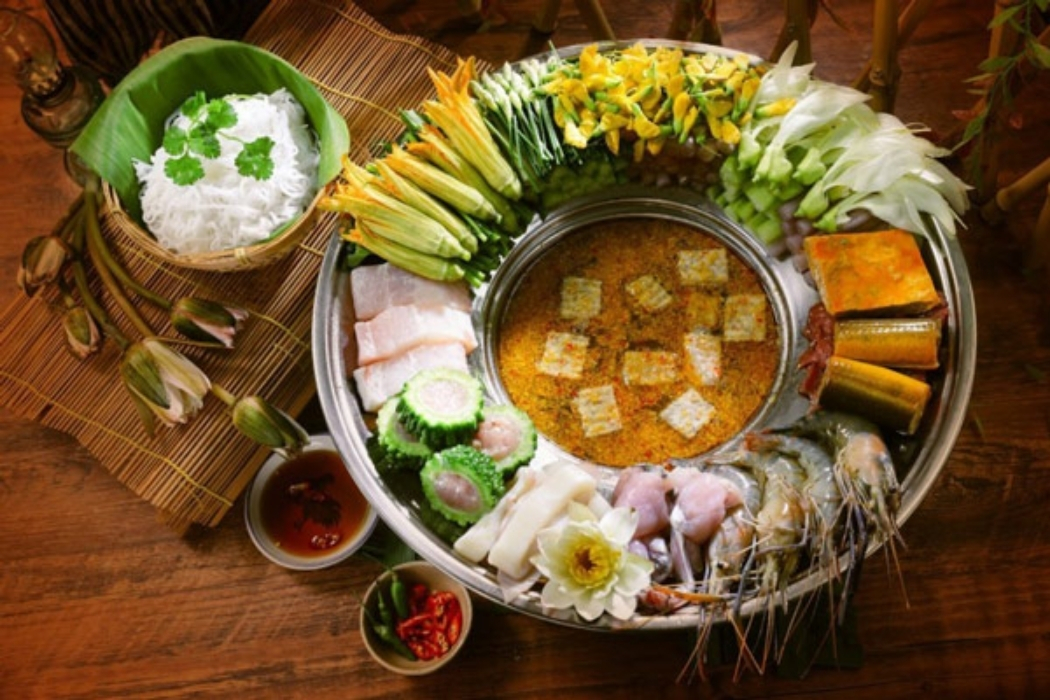
- Lẩu Mắm (Fermented Fish Hotpot): “Bản hòa tấu” của miền Tây sông nước với hàng chục loại rau đồng nội, một hương vị nồng nàn mà ai đã yêu thì sẽ nhớ mãi không quên.
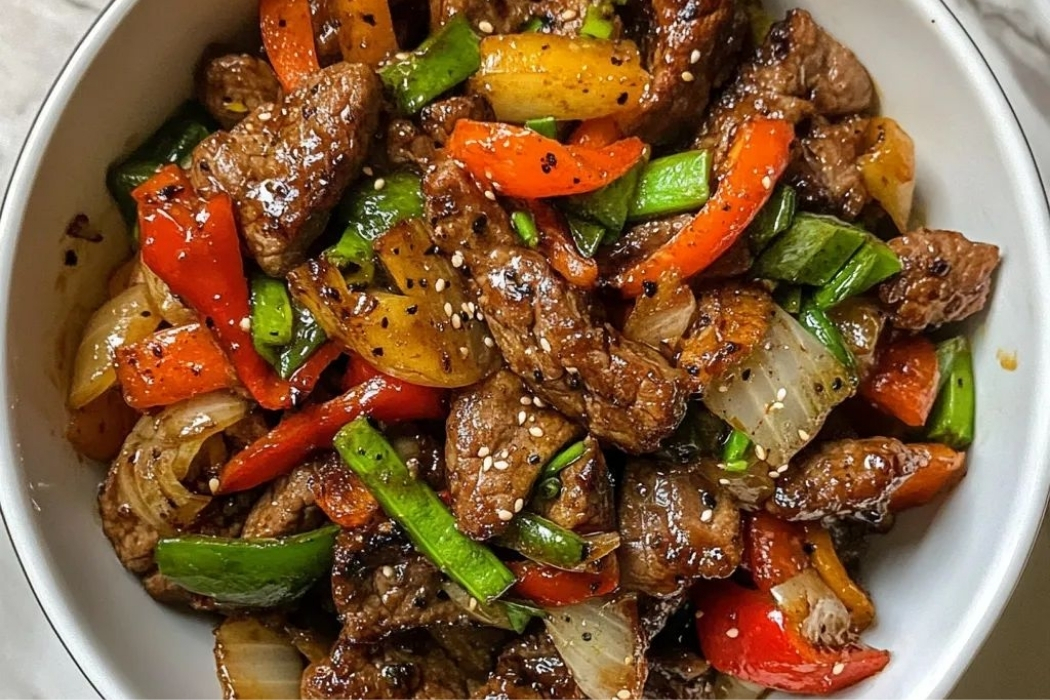
- Bò Lúc Lắc (Shaking Beef)
Bò Lúc Lắc translates to “shaking beef,” a name derived from the cooking technique where the pan or wok is constantly shaken to sear the beef cubes evenly. This dish reflects a subtle French influence through the use of butter and the focus on sautéed beef, which was traditionally a luxury ingredient in Vietnamese households.
The beef is marinated in soy sauce and garlic, ensuring it remains tender and juicy with a slightly caramelized exterior. It is traditionally served over a bed of watercress, tomatoes, and cucumbers, often accompanied by a simple dipping sauce of lime juice, salt, and pepper. It is a savory, high-protein favorite that is both elegant and satisfying.
Where to Experience Authentic Vietnam in London
If you haven’t yet had the chance to wander through the vibrant alleys of Hanoi or feel the humid evening breeze of the Mekong Delta, don’t let the distance deter you. You don’t need a boarding pass to embark on this sensory pilgrimage; you only need to know where to look.
London has become a sanctuary for those seeking the authentic pulse of Vietnamese culture. The legendary “Phở Mile” on Kingsland Road (Hoxton) remains the spiritual heart of the community, where family-run kitchens have served generations with recipes brought across the seas. Meanwhile, the elegant streets of Islington offer a more tranquil setting to discover the sophisticated nuances of our heritage.
The Icons of the Phở Mile: A Journey Through Kingsland Road
To walk down Kingsland Road is to walk through a living history of Vietnamese culinary mastery in the UK. This celebrated stretch is home to several institutions, each with its own undeniable strength:
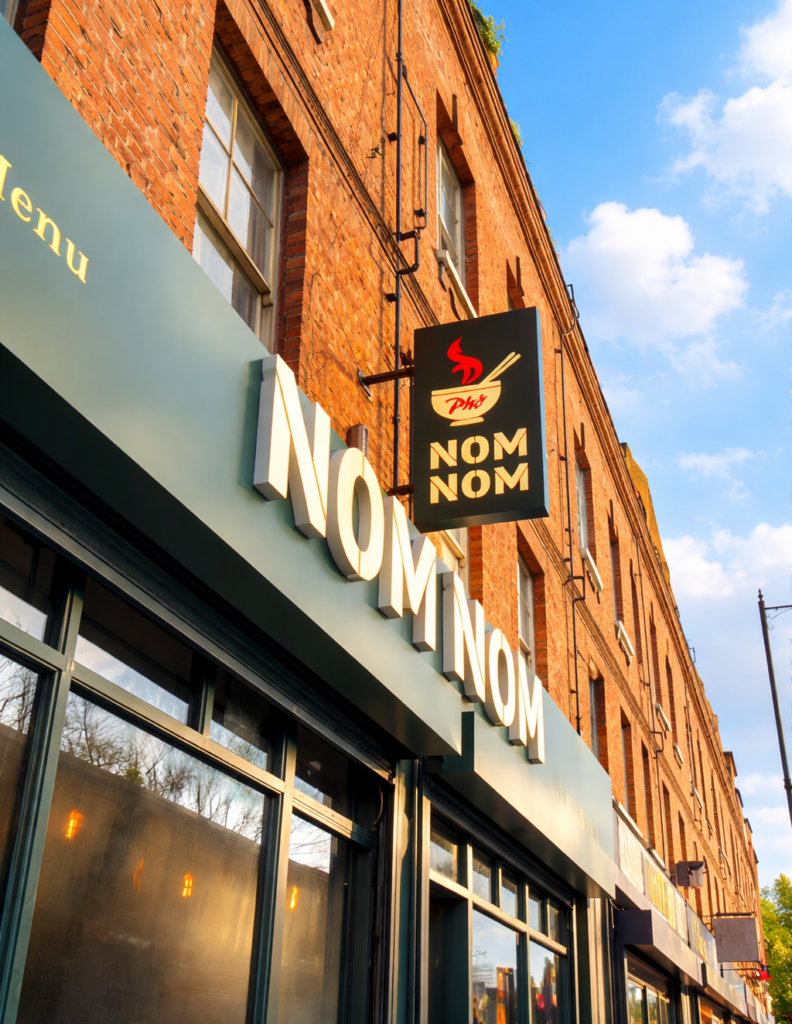
- Nom Nom: Located at 134-136 Kingsland Rd (E2 8DY), this cornerstone has been a fixture of the “Phở Mile” since 2015. It is widely celebrated for its rich, Southern-style Phở and a remarkably inclusive menu that caters extensively to vegan diners seeking authentic, plant-based depths.
- Sông Quê: A true pioneer of the area, legendary for its consistency and a classic, no-nonsense approach to traditional Northern-style beef Phở.
- Sen Việt: A beloved sanctuary for local foodies, highly regarded for its extensive menu and home-style dishes that evoke the warmth of a family kitchen in Vietnam.
- Mien Tay: Famous for bringing the rustic, vibrant soul of the Mekong Delta to East London, particularly through their signature seafood specialities.
- Bun Bun Bun: A vibrant spot that captured the hearts of the Shoreditch crowd with its smoky grilled meats and authentic Hanoi-style Bún Chả.
Nem & Nom: A Family Kitchen in the Heart of London
The story of Nem & Nom began in 2015 with a simple, personal mission: to bring the honest, unpretentious flavours of a Vietnamese family kitchen to London. What started as a single location has grown into two distinct homes, each reflecting a different side of the city’s energy.
Nom Nom: 134-136 Kingsland Rd, London E2 8DY
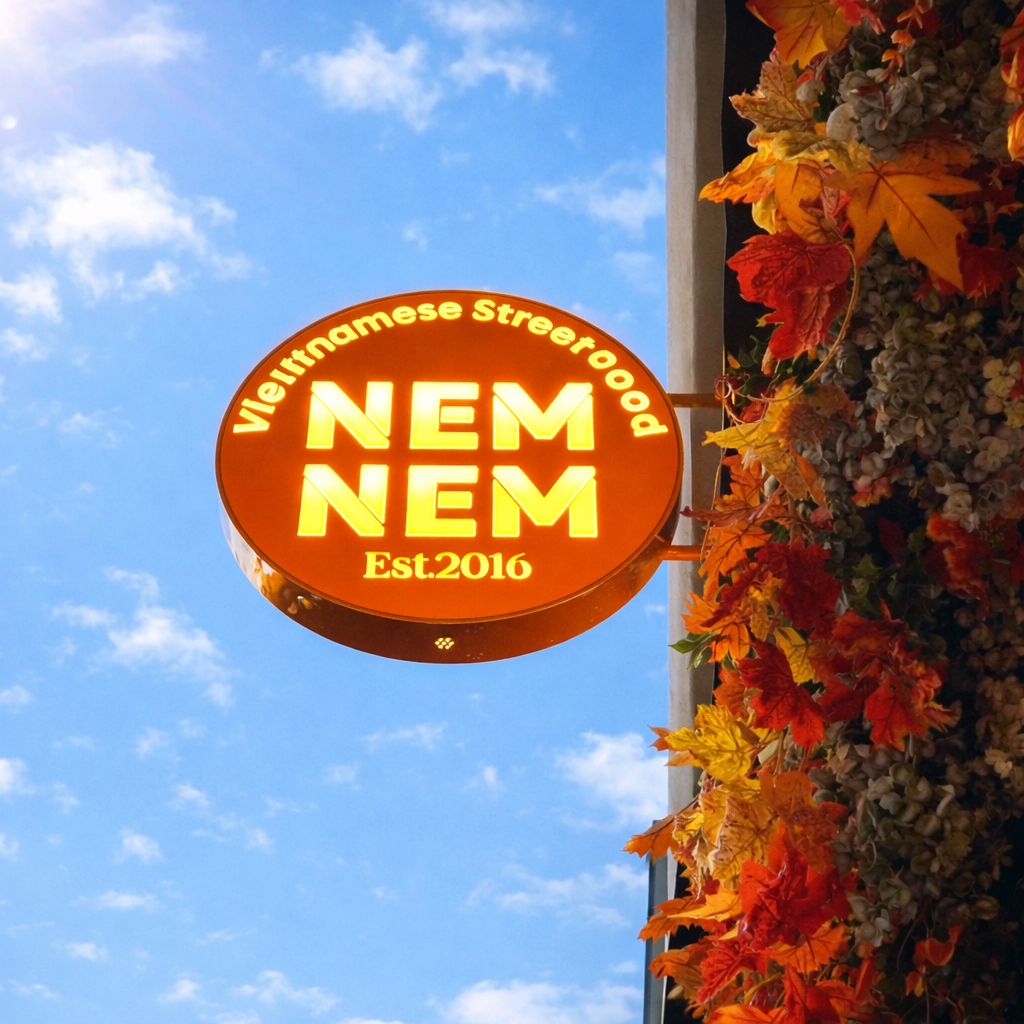
Nem Nem: 279 Upper Street, London N1 2TZ
Despite their different settings, both restaurants are united by the same family-run spirit and a dedication to authenticity.
There are no frills or over-the-top presentations at Nem & Nom. Instead, there is heart. Every bowl of Phở and every hand-rolled Nem is a small piece of a distant home, shared with the international community of London. It is a place where the steam from the kitchen and the warmth of the service remind guests that, even in a big city, they can always find a family table.